A ledger that reconciles, because nothing in it is stored twice.
Estimates, proposals, invoices, payments, credit notes, subscriptions and rebillable expenses. An invoice’s balance always matches its payments and credit notes, so the list, the PDF and the customer’s portal can never disagree.
One invoice, step by step
Lines
From your item library, each with its own tax rate.
Tax
Worked out per line, exactly — never a rounded guess.
Payments
Recorded in full or in part, against this invoice.
Credit note
Applied here if the customer has standing credit.
Balance
What is left after payments and credit — shown correctly, every time you look.
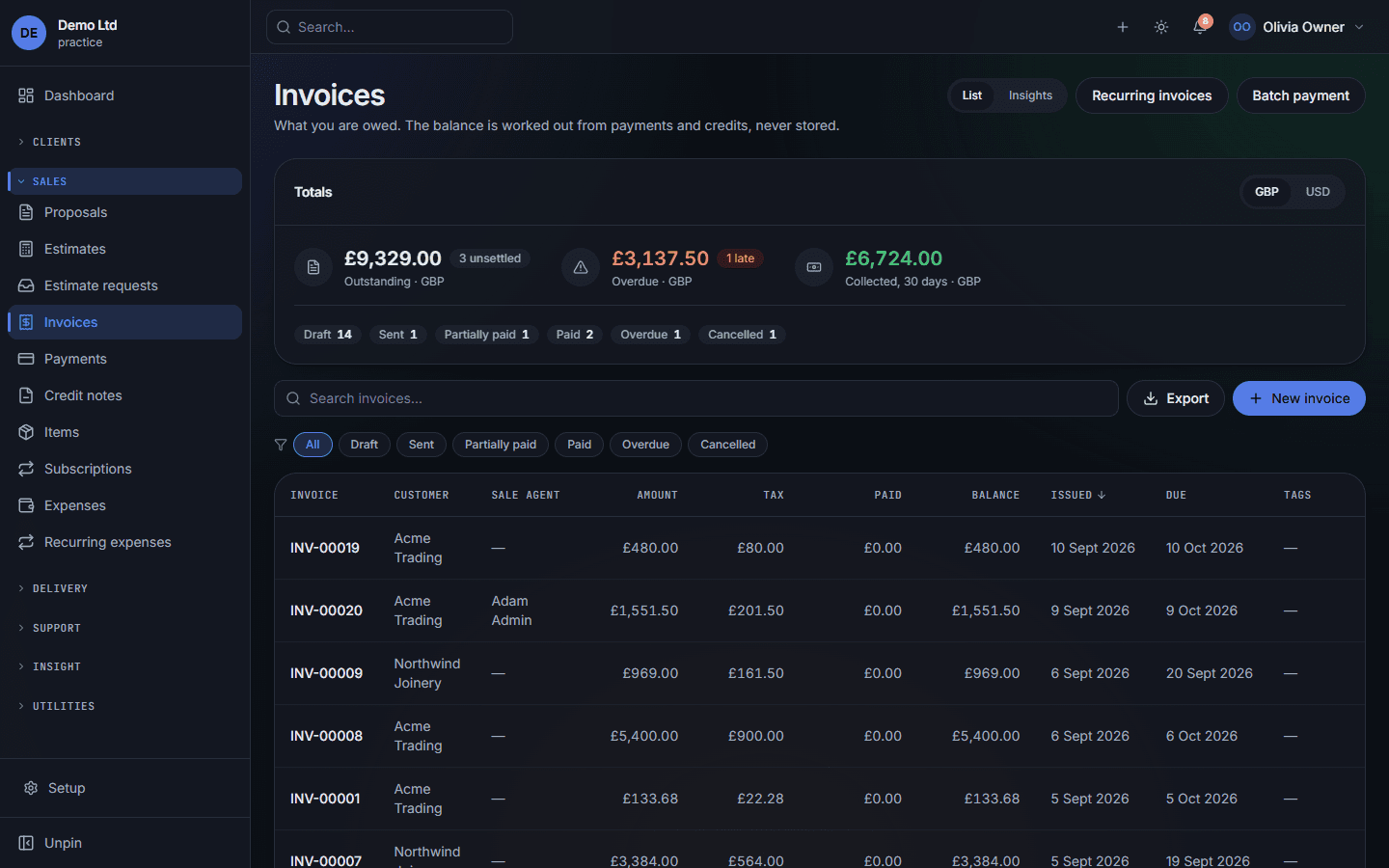
Two currencies, never added together
Totals are per currency. A pound and a dollar are not summed into a number that means nothing.
Counts of what the table shows
The status counts and the filter chips below read the same query, so a count and the rows it opens always agree.
Invoice numbers that never skip or repeat
Every invoice number is unique to your firm — two people saving at the same moment never collide, and a deleted draft never frees its number for reuse.
Balance, always up to date
Paid and balance always reflect the payments and credit notes on the invoice. Reverse a payment and every screen shows the change straight away.
Also in Sales
Estimates and proposals — Priced documents the customer accepts or declines online, turned into an invoice without retyping. Invoices — Line items from your item library, tax per line, PDF, email, and online payment through your own Stripe account. Payments and credit notes — Recorded against invoices, partially or in full; credit stands on the customer until it is applied. Subscriptions and recurring invoices — Billing that raises itself on a schedule, with the rule visible on every invoice it raised. Expenses — Costs against a customer or project, rebilled onto an invoice exactly once.
What keeps it reconciled
Totals that always add up to the penny
Every line, every tax rate and every total add up exactly, with no rounding drift — a 20% tax line is always exactly 20%.
The total can only come from the invoice itself
An invoice’s total is worked out from its lines. Nobody can quietly override the figure, or mark an invoice paid, from outside the product.
Opened, or not
Each invoice records when the customer first opened it, so "we never received it" has an answer.
Exports what your accountant needs
A clean export of every invoice, payment and credit note, ready for the books, on the schedule your accountant already works to.