Questions answered where the answer already lives.
A support desk with departments, priorities, SLA clocks, macros and escalation — fed by the portal and by email, and sitting beside the customer’s invoices and projects, so whoever answers already has the context.
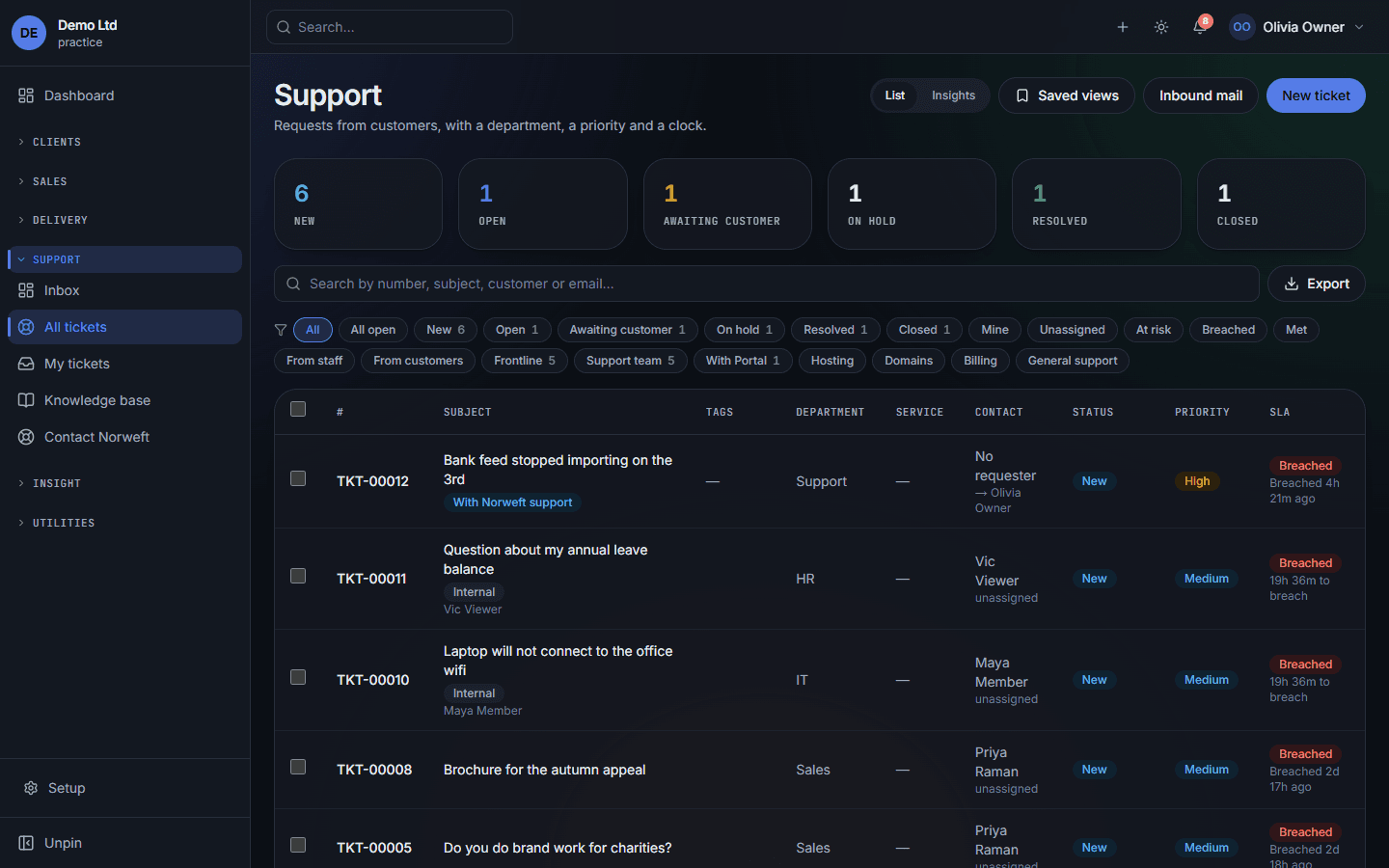
Counts that match the filters
Each status tile and the chip that filters to it count the same query, within what this person may see.
Levels and departments
Frontline, the support team, and escalation beyond — each person sees the levels and departments they belong to.
Internal requests in the same queue
A colleague asking IT or HR for something uses the same desk, marked as internal and named as theirs.
The clock, on every row
SLA state is worked out against your working hours, so "breached" means breached on your calendar.
Also in Support
Inbox — The queue by status and level, with SLA badges that change before a deadline is missed. Tickets — Replies, internal notes, macros, merging, and a customer rating once it is resolved. Departments — Who serves whom — the portal, public forms and inbound email each route to the right team. Knowledge base — Articles for customers in the portal and for staff inside the product. Inbound email — Mail to your support address becomes a ticket, with blocked senders and spam filters you control.
How the clock and the queue behave
SLA clocks that run on your working hours
Response and resolution targets count the hours your firm actually works, in your own timezone.
Visibility by department
An agent sees the departments they belong to, so their queue is only ever the tickets that are actually theirs to answer.
The customer is right there
A ticket shows the company, their open invoices and projects, so whoever answers already knows who they are talking to.
Macros your team writes and chooses
A macro is written by your team and sent by a person’s choice, every time.